As digital services continue to grow, online security has become a top concern for businesses and consumers alike. Cybercrime, identity theft, and unauthorized account access are significant threats that can result in financial losses, reputational damage, and legal consequences. Traditional methods of verification, such as passwords or PINs, are no longer sufficient to prevent sophisticated attacks. This has led to the increasing adoption of face recognition technology, particularly Face Check ID, as a reliable tool for securing online transactions and account verification.
Understanding the safety, effectiveness, and applications of face ID check is essential for businesses seeking to protect sensitive data while providing a seamless user experience.
Understanding Face Check ID
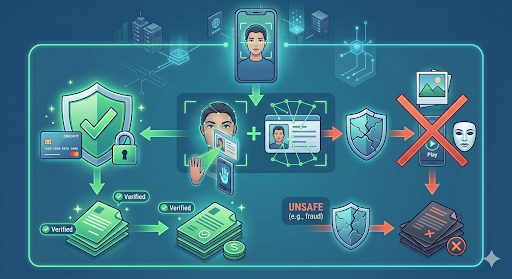
Face Check ID, sometimes referred to as face check ID or check face ID, is a biometric verification system that authenticates a user’s identity using facial features. During the verification process, a live image of the user is compared against a submitted document, such as a passport or driver’s license, or an existing database of verified identities. Advanced algorithms evaluate facial landmarks, skin texture, and micro-expressions to ensure that the person is real and physically present.
Unlike password-based systems, which can be compromised through phishing or credential theft, face ID check adds a dynamic layer of verification. It not only confirms identity but also prevents the use of photos, videos, or synthetic media to bypass security measures.
Why Face Check ID Is Important for Online Transactions
Online transactions, particularly in banking, e-commerce, and digital payment systems, require secure and reliable verification methods. Fraudulent transactions can occur if unauthorized users gain access to accounts, often leading to significant financial and reputational losses.
Facecheck ID ensures that only the rightful account holder can approve transactions by verifying the individual in real time. The system detects whether the user is physically present and cross-references the live image with their official documents. This prevents unauthorized access, reduces the risk of account takeovers, and adds confidence for both businesses and consumers that transactions are secure.
How Face Recognition Protects Against Fraud
Face recognition technology provides several mechanisms that enhance the security of online transactions. First, it incorporates liveness detection, which identifies whether the face presented is real and not a photograph or video replay. This reduces the risk of spoofing attacks that attempt to trick verification systems.
Second, face ID check algorithms compare facial features with official identification documents or pre-registered images. This ensures the authenticity of the user’s identity. Continuous improvements in AI and machine learning models allow these systems to recognize subtle differences and maintain high accuracy even in challenging conditions, such as poor lighting or varied camera angles.
By implementing face check ID, businesses can detect and prevent fraudulent activities in real time, making online transactions safer for customers and reducing liability for service providers.
Applications Across Industries
Face Check ID is increasingly being adopted across multiple sectors. In financial services, it secures online banking and payment platforms, ensuring that account holders are verified before approving high-value transactions. This minimizes the risk of fraud and unauthorized transfers.
In e-commerce, face recognition helps prevent fake accounts and fraudulent purchases by verifying users before completing transactions. Similarly, digital wallets and payment apps rely on face ID check to confirm identity for secure access and transaction approval.
Healthcare organizations use facecheck ID to authenticate patients accessing sensitive medical records, ensuring that personal health information is protected and only accessed by authorized individuals. Even corporate environments leverage face recognition technology for employee verification, securing internal systems and sensitive data.
Accuracy and Reliability of Face Check ID
The effectiveness of face recognition systems depends on their underlying technology and dataset diversity. Modern facecheck ID solutions use deep learning algorithms to analyze facial features in detail, including the spatial relationships between eyes, nose, and mouth, as well as skin texture and expression patterns. Liveness detection adds an extra layer of protection by confirming that the verification is being conducted by a live individual.
These advanced systems have shown high accuracy in distinguishing between genuine users and fraudulent attempts. By continuously updating AI models and incorporating diverse datasets, face ID check platforms maintain consistent reliability across different demographics, lighting conditions, and camera qualities.
Benefits of Using Face Check ID for Account Verification
Implementing facecheck ID for online account verification provides numerous advantages. It reduces the risk of account takeovers by ensuring that login attempts are verified in real time. This is particularly important for financial and digital service providers, where unauthorized access can lead to significant losses.
Face recognition also improves operational efficiency. Manual identity verification is time-consuming and prone to errors, while automated face ID check systems streamline the process. Users can verify their identities quickly and securely, enhancing customer satisfaction.
Another key benefit is regulatory compliance. Many industries are subject to Know Your Customer (KYC) and Anti-Money Laundering (AML) regulations that require robust identity verification. By using facecheck ID, businesses can meet compliance requirements while maintaining a high level of security.
Finally, the use of face recognition fosters customer trust. Users feel more confident interacting with services that prioritize secure verification, knowing that their personal data and transactions are protected.
Implementing Face Check ID
For businesses considering face ID check, it is important to integrate the technology in a way that balances security and user experience. Verification processes should be simple and intuitive, avoiding unnecessary friction that could deter users from completing transactions.
Privacy and data protection are also critical. Organizations must ensure that facial data is securely stored and processed in compliance with regulations such as GDPR or CCPA. Secure handling of biometric data not only protects users but also reinforces trust in the service.
Integrating facecheck ID with existing verification workflows, such as document verification and multi-factor authentication, creates a layered security approach. This further strengthens account protection and minimizes the risk of fraud.
Challenges and Considerations
While face recognition enhances security, businesses must be aware of potential challenges. Device dependency can affect verification if users lack compatible cameras or smartphones. Environmental factors, such as poor lighting, can impact image capture, though modern AI algorithms compensate for many of these conditions.
User education is also important. Customers should understand how face check ID works, why it is necessary, and how their data is protected. Transparent communication can reduce concerns and increase adoption rates.
Lastly, businesses must plan for backup and recovery options in case users cannot complete facial recognition and verification due to technical issues or accessibility needs, ensuring continuity without compromising security.
The Future of Face Recognition in Online Transactions
The use of face recognition technology in online transactions is expected to grow rapidly. Future trends include passwordless authentication, where users can verify their identities without entering traditional passwords, and AI-driven monitoring that detects suspicious login behavior in real time.
Face check ID systems may also incorporate multi-modal biometrics, combining facial recognition with voice, iris, or behavioral verification for higher security. As cyber threats evolve, these innovations will ensure that online transactions and account verification remain secure, efficient, and user-friendly.
Conclusion
Face Check ID provides a robust solution for securing online transactions and verifying accounts. By using facial recognition technology with liveness detection and real-time verification, businesses can protect against fraud, prevent account takeovers, and maintain compliance with regulatory standards.
The benefits extend beyond security. Facecheck ID improves operational efficiency, enhances user experience, and builds customer trust. As digital transactions become more prevalent, adopting face ID check ensures that businesses stay ahead of evolving cyber threats while offering a secure and seamless verification process for users.